CoreWeave and Nebius — Two Divergent Paths for GPU Clouds
Treating 2026’s AI capex as a single business, the two most striking listed names are these two Neoclouds. CoreWeave (NASDAQ:CRWV) began as an Ethereum mining operation in New Jersey in 2017, IPO’d in March 2025, and posted $2.1B revenue in Q1 2026 with a $99.4B backlog. Nebius (NASDAQ:NBIS) is the parent that emerged in 2024 after Yandex N.V. divested its Russian operations — registered in Amsterdam, run by former Yandex founder Arkady Volozh — and had reached $1.2B ARR by year-end 2025. Its Q1 2026 results will be released on May 13. Same Neocloud model, almost diametrically opposed origins. This piece is organized along four axes: founding history, founding team, business status, and the essential difference from Hyperscalers. All data drawn from the most recent public disclosures.
Overview — different starting points · same destination as GPU factories
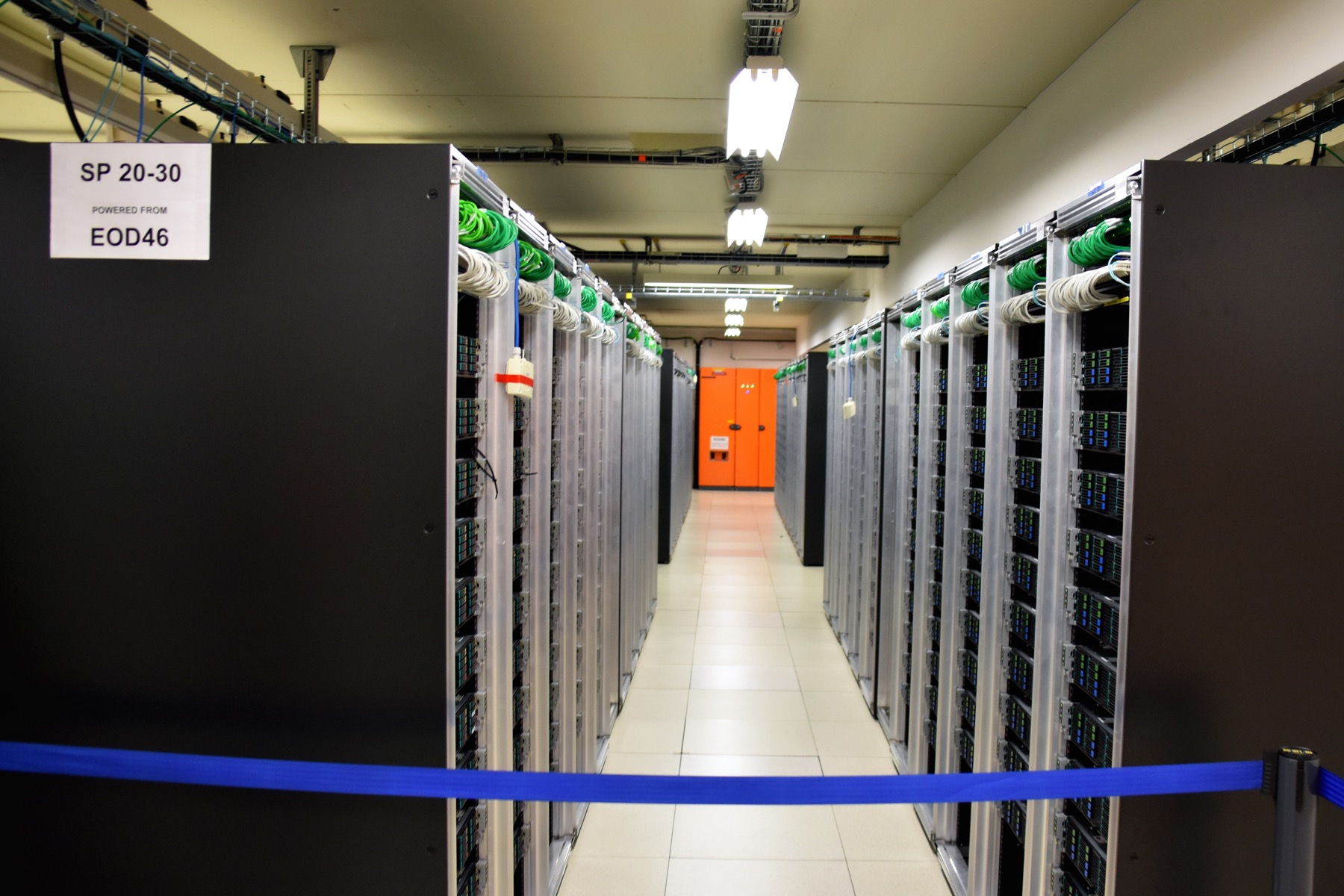
Image: Wikimedia Commons (SimonWaldherr) · CC BY-SA 4.0.
| Item | CoreWeave (CRWV) | Nebius (NBIS) |
|---|---|---|
| Headquarters | Roseland, New Jersey, US | Amsterdam, Netherlands |
| Listing | 2025-03-28 NASDAQ IPO | 2024-10 resumed trading (renamed from Yandex N.V.) |
| Most recent quarterly revenue | Q1 2026 $2.1B (+112% YoY) | Q4 2025 ARR $1.2B; Q1 2026 forthcoming (5/13) |
| 2026 revenue guidance | $12B-13B | $3B-3.4B |
| 2026 exit ARR | $18B floor | $7B-9B target |
| Contracted backlog (RPO) | $99.4B (end of Q1 2026) | ~$50B (cumulative through Q1 2026) |
| Contracted power capacity | 3.5 GW (>1 GW energized) | 3+ GW (800 MW-1 GW connected by year-end) |
| Anchor customers | Microsoft, OpenAI, Meta, Anthropic | Microsoft, Meta, multiple AI labs |
| NVIDIA relationship | Strategic shareholder + priority supply | $2B strategic equity + continuing PIPE |
| Capital structure | GPU-collateralized ABS dominant ($8.5B IG-rated) | Spinoff cash + NVIDIA PIPE + converts, lower leverage |
Same business, two paths — CoreWeave uses a commodities-trader mindset, packaging each GPU cluster into an SPV and issuing asset-backed debt against customer take-or-pay cash flows; Nebius inherits Yandex’s engineering team + ~$2.5B in spinoff cash + NVIDIA’s $2B strategic equity, running a “lighter” balance sheet.
— Don’t just look at Neocloud revenue growth; look at capital structure.
Founding history — mining farm vs search engine
CoreWeave: from Ethereum miner to AI training infrastructure
| Year | Key milestone |
|---|---|
| 2017 | Three New Jersey commodities traders + one engineer formed Atlantic Crypto in a garage, acquiring thousands of GPUs to mine Ethereum |
| 2019 | Renamed CoreWeave, redirected mining-farm compute toward VFX rendering and early machine learning customers |
| 2022-09 | Ethereum’s Merge ended PoW; mining ended; full pivot to AI training, deep partnership with NVIDIA |
| 2023 | NVIDIA strategic investment + priority H100 allocation; Microsoft becomes anchor customer |
| 2024 | Microsoft accounts for ~62% of revenue; Q4 closes $7.5B asset-backed credit facility (led by Blackstone) |
| 2025-03 | NASDAQ:CRWV IPO at $40, raising ~$1.5B; same month signs 5-year $11.9B compute deal with OpenAI |
| 2025-09 | Acquires Weights & Biases for ~$1.7B; signs $14.2B 6-year contract with Meta; OpenAI adds $6.5B (total reaches $22.4B) |
| 2026-Q1 | Meta adds another $21B (total reaches $35B); Anthropic multi-year Claude inference deal; closes $8.5B investment-grade GPU-collateralized loan (DDTL 4.0) |
Nebius: from Yandex international business to independent AI cloud
| Year | Key milestone |
|---|---|
| 2013-14 | Yandex purchases land in Mäntsälä, Finland and builds its first overseas data center, using wing-shaped passive air cooling, PUE 1.1 |
| 2022-02 | Russia invades Ukraine; Yandex N.V. (the NASDAQ-listed international parent) trading is suspended; founder Volozh publicly opposes the war and resigns from Yandex’s board |
| 2023-2024 | Yandex N.V. negotiates Russian operations divestiture; ultimately sells Russian business to a Russian consortium for $5.4B; parent retains international data centers, AI team, Toloka (data labeling), Avride (autonomous driving), TripleTen (vocational education) |
| 2024-07 | Spinoff complete; parent renamed Nebius Group N.V., HQ moved to Amsterdam; retains ~1,300 engineers |
| 2024-10 | NASDAQ:NBIS resumes trading, Volozh becomes CEO |
| 2024-12 | NVIDIA invests $700M via PIPE |
| 2025-09-08 | Signs 5-year $17.4B compute deal with Microsoft (extendable to $19.4B), building dedicated data center in Vineland, New Jersey, $7B upfront payment |
| 2025-2026 | Signs $27B multi-year contract with Meta; NVIDIA strategic stake accumulates to ~$2B; expanding across Kansas City, Paris, Finland, Vineland |
| 2026-05-01 | Announces acquisition of Eigen AI (model inference optimization) for $643M |
The “original sin” and “dividend” of each path — CoreWeave’s dividend is the commodities trader’s instinct for capital structure, with mining-era GPU procurement, site selection, and power negotiation directly reusable in AI; Nebius’s dividend is the inheritance of a 1,300-person Yandex engineering team that has already built hyperscale search/ads/cloud, with Mäntsälä not a new build but an asset operating since 2014. The former uses money to solve problems, the latter uses people.
Founding team — commodity traders vs Russian internet veterans
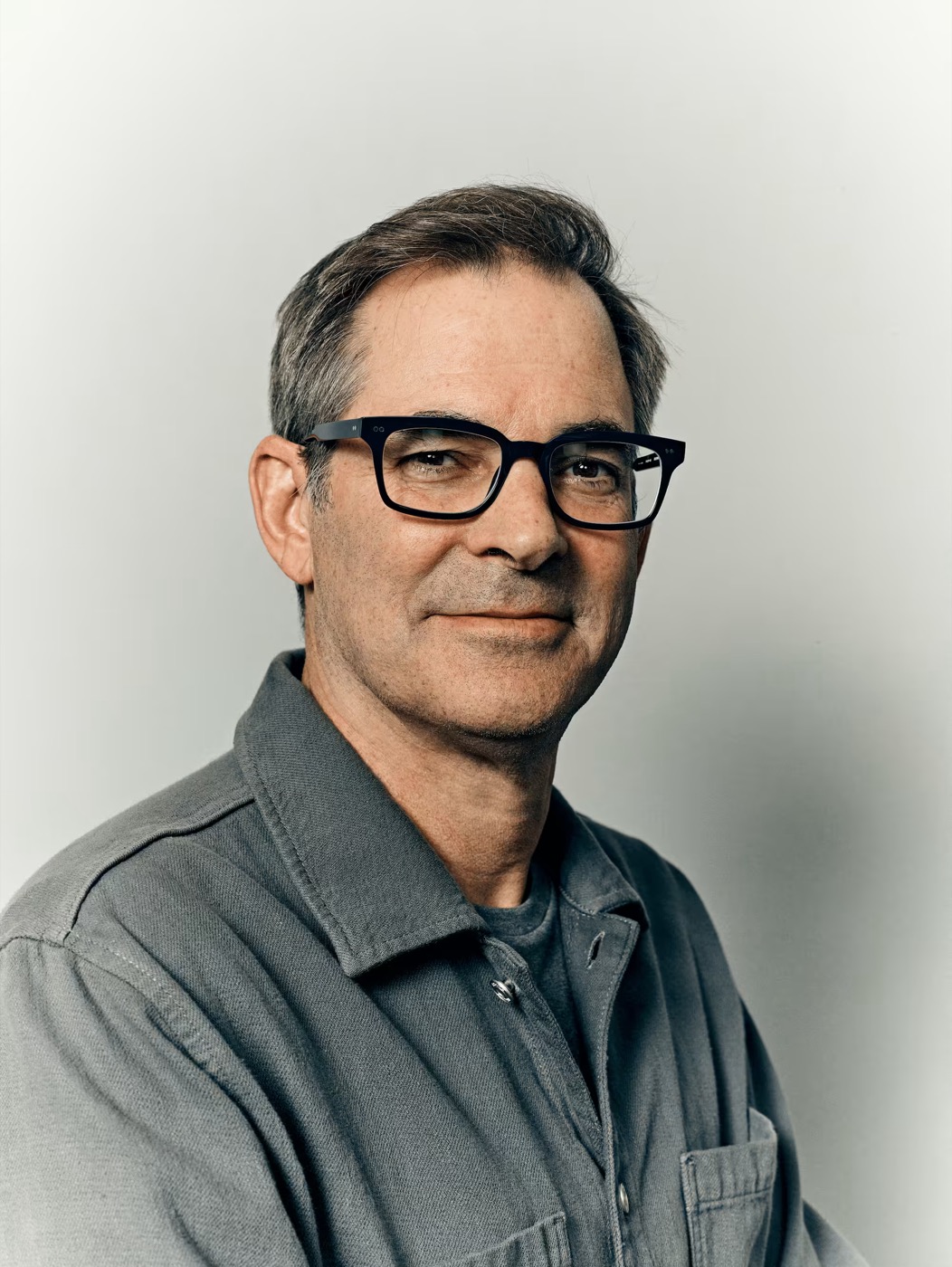
Image: CoreWeave official Leadership page · editorial use.
CoreWeave — three commodities traders + one engineer
- Michael Intrator · CEO / Chairman · BA political science (Binghamton) + Columbia MPA; previously ran Hudson Ridge Asset Management (natural gas hedge fund)
- Brian Venturo · CSO · Hudson Ridge co-founder; Bloomberg estimates personal net worth ~$6.4B (2025)
- Brannin McBee · CDO · energy commodities trader background; personal net worth ~$4.7B
- Peter Salanki · CTO · engineering background, leads GPU cluster networking and Slurm/K8s scheduling stack
Viewing GPUs through a commodities trader’s lens — the three founders treat H100s as commodities like crude oil, natural gas, and electricity: lock in price with long-term contracts, arbitrage residual allocations at high frequency, collateralize inventory for financing. This is the cognitive substrate behind CoreWeave’s three consecutive $8B+ asset-backed loans in 2024-2026. A Hyperscaler CFO would not design a balance sheet this way.

Image: Wikimedia Commons (Mark David, 2024-09) · CC BY-SA 4.0.
Nebius — Yandex veterans
- Arkady Volozh · founder/CEO · born 1964 in Kazakhstan, founded CompTek in 1989 as a hardware distributor, co-founded Yandex with Ilya Segalovich in 2000; Russia’s “Bezos” of tech; sanctioned briefly by the EU after publicly opposing the war in 2022, sanctions later lifted
- Andrey Korolenko · CIO · Yandex infrastructure veteran, led Mäntsälä data center and RuNet uplink architecture
- Roman Chernin · CBDO · former Yandex business development executive, now Nebius commercial lead
Volozh’s generational advantage — he is one of the few founders who has built “consumer search + advertising + proprietary cloud + autonomous driving + vocational education” all to IPO scale. Nebius’s three non-cloud businesses (Toloka / Avride / TripleTen) look like noise to Hyperscalers, but in Volozh’s portfolio view, they are assets hedging the single GPU cycle.
— Nebius is not a pure GPU bet; this is part of why its valuation multiple diverges from CoreWeave’s.
Business status — scale / customers / capacity / capital
Table 1 · Financial comparison (most recent actuals)
| Metric | CoreWeave Q1 2026 | Nebius Q4 2025 / Q1 2026 |
|---|---|---|
| Revenue | $2.1B (+112% YoY · +32% QoQ) | Q4 2025 sales +547% YoY; Q1 2026 estimate ~$389M |
| ARR (annual run rate) | 2026 exit ARR floor $18B (raised by management) | Q4 2025 end ~$1.2B (above original guidance); 2026 end target $7-9B |
| 2026 revenue guidance | $12B-13B (maintained) | $3B-3.4B (maintained) |
| Contracted backlog RPO | $99.4B (end of Q1) · added $40B+ within the quarter | ~$50B cumulative (Microsoft + Meta dominant) |
| 2030 compute plan | >8 GW total contracted power | Progress aligned with 2027-2028 midterm targets |
Table 2 · Customer structure
| Customer | CoreWeave | Nebius |
|---|---|---|
| Microsoft | 2024 62% of revenue, 2025 67%; expected <50% in 2026 | 2025-09 signed 5-year $17.4-19.4B ($7B upfront) · Vineland NJ dedicated data center |
| OpenAI | 5-year $11.9B (2025-03) + $6.5B addendum (2025-09) = $22.4B | No major disclosures |
| Meta | $14.2B (2025-09) + $21B (2026-Q1) = $35B through 2032 | Multi-year $27B contract (2026-Q1) |
| Anthropic | 2026-04 multi-year Claude inference deal | None disclosed |
| Concentration | Top three customers account for the majority; single-customer cap ~35% | Microsoft is single largest, but diluted by Meta + multiple AI labs |
Microsoft is the largest customer at both companies simultaneously — Hyperscalers are building their own capacity (2026 capex $190B) while outsourcing training peaks to Neoclouds. This “base load in-house, peaks outsourced” strategy protects Azure’s margins while preventing OpenAI / Anthropic GPU demand from hitting Azure’s capacity wall. Neoclouds are the externalization vehicle for Hyperscaler capital structure.
Table 3 · Capacity / data center expansion
| Dimension | CoreWeave | Nebius |
|---|---|---|
| Energized capacity | >1 GW (Q1 2026) | ~50 MW (end of 2025) · accelerating connection |
| Contracted power | 3.5 GW | 3+ GW |
| Year-end target | Capacity additions continuing throughout the year | 800 MW-1 GW energized, 9 new sites + 16 total sites |
| 2030 plan | >8 GW | Similar growth multiple as CRWV but ~1/3 absolute volume |
| Main locations | NJ, TX, VA, PA, UK, Sweden | Mäntsälä Finland, Kansas City / Vineland NJ, Paris France, Israel (supercomputing project) |
Table 4 · Capital structure
| Dimension | CoreWeave | Nebius |
|---|---|---|
| Core debt instruments | DDTL 4.0 $8.5B investment grade (Moody’s A3 / DBRS A-low), SOFR+225 / 5.9% fixed, due 2032 | 2025 $3B+ converts + bank credit lines; leverage materially lower than CRWV |
| Collateral structure | GPUs + customer take-or-pay contracts; first investment-grade HPC-collateralized loan | General corporate debt + project financing secured by Microsoft contract |
| Cash sources | IPO proceeds ~$1.5B + subsequent secondaries + free cash flow | Yandex spinoff cash ~$2.5B + NVIDIA cumulative ~$2B equity + converts |
| Equity market cap | 2026-05 ~$70B order of magnitude (varies with price) | 2026-05 ~$25-30B order of magnitude |
| Leverage (net debt / EBITDA) | High (EBITDA still in ramp, loans rolling) | Low (just starting to draw debt, equity capital abundant) |
The meaning of DDTL 4.0 — packaging GPUs + long-term customer contracts to a Moody’s A3 rating means insurance companies, pension funds, and mutual funds — that tier of capital — can compliantly buy “AI capex” debt for the first time. The pool expands from private credit to investment-grade public markets. Each new rating tier unlocks ~50-100 bps lower funding cost, flowing directly to Neocloud margins. Nebius has not yet reached this step, but Microsoft’s $7B upfront payment is essentially the same mechanism — customer prepayment substitutes for IG-rated debt.
Core difference from traditional cloud — Neocloud vs Hyperscaler
Ten-dimension comparison
| Dimension | Neocloud (CRWV / NBIS) | Hyperscaler (AWS / Azure / GCP) |
|---|---|---|
| Scope | GPU + supporting high-speed networking/storage, extremely narrow vertical | Compute / storage / networking / database / SaaS, 200+ services |
| GPU revenue share | 95%+ | <30% (rest is EC2, S3, SageMaker, Bedrock, etc.) |
| Customer structure | AI labs + model companies + Hyperscaler overflow | Millions of general enterprises + government + SMB developers |
| Contract form | 3-7 year reserved, take-or-pay | Various (on-demand / reserved / committed spend); take-or-pay only for large customers |
| Network architecture | InfiniBand 3.2 Tb/s (NDR/XDR) priority, large clusters single-tenant | Proprietary SDN (AWS Nitro / Azure Boost / GCP Andromeda), Ethernet 800 Gb/s, multi-tenant |
| Deployment speed | Customer signing to energizing: months to a year | In-house capacity from planning to energizing: years |
| Capital structure | GPU-collateralized ABS / SPV / customer prepayment, 30-40% gross margin | Free cash flow funding, 60-70% gross margin |
| Software stack | Bare-metal + Slurm/K8s + direct NCCL/MPI, lowest latency | Thick abstraction layers (Bedrock / Vertex / SageMaker wrappers), suited to general workloads |
| Pricing | DGX H100 instance hourly ~$34 (vs hyperscaler ~$98) · 65-85% discount | High public list + EDP discounts for large customers |
| Main risks | Single-customer concentration, GPU residual value, interest rate sensitivity, contract renewal | Antitrust, regulation, AI sovereign cloud competition, customer attrition |
Three essential differences (expanded)
① Vertical depth vs horizontal breadth
Neoclouds sell nine 9’s on a single GPU cluster — tuning InfiniBand fabric, NVLink, NCCL collectives, bare-metal Linux to the extreme; Hyperscalers sell a complete enterprise IT replacement solution, with GPUs as just a few SKUs. The former is like TSMC, the latter like Foxconn.
② Capital sources
Hyperscalers use 30 years of accumulated free cash flow as internal funding, with GPUs as one capex item across diversified businesses; Neoclouds package each GPU cluster individually into SPVs and issue debt secured by customer contracts — the asset itself is securitized first, then produces revenue. This structure makes Neoclouds relatively more upside-leveraged in low-rate environments versus Hyperscalers, but amplifies downside under rising rates + customer defaults.
③ Customer structure
Hyperscalers’ top 100 customers may not even account for 30% of revenue; Neocloud top 5 customers typically account for 80%+. CoreWeave’s pre-IPO disclosure showed Microsoft alone at 62% of revenue (2024). Even with OpenAI / Meta / Anthropic now in the mix, business still revolves around “top 5 customers.” This is the core reason Neoclouds must trade at a valuation discount.
Why do Hyperscalers themselves also rent from Neoclouds? Speed + capital structure externalization + training peak burst capacity. Microsoft Azure is pulling 2026 in-house capex to $190B while simultaneously signing $10B+ multi-year with CoreWeave and $17.4B 5-year with Nebius. On the surface, this looks like a “build + outsource” hybrid; in essence, it’s letting OpenAI / Anthropic / Azure’s own AI business training peaks be absorbed by the Neocloud layer, protecting Azure’s margin structure + balance sheet.
— This is the true demand function behind 2024-2026 Neocloud valuation expansion.
Investment view — valuation and three risks
Valuation multiples (May 2026)
| Multiple | CRWV | NBIS | Notes |
|---|---|---|---|
| EV / 2026 revenue | ~5-6× | ~7-8× | NBIS more expensive on valuation, but ARR acceleration faster |
| EV / 2026 exit ARR | ~3.5-4× | ~3-4× | Close; ARR is the more comparable metric |
| EV / contracted GW | ~$20B / GW | ~$10B / GW | NBIS cheaper per GW |
| EV / RPO | ~0.7-0.8× | ~0.5-0.6× | NBIS RPO at larger discount |
Three common risks
- Customer concentration / renewal risk — top 3 customers account for the majority; one adverse renewal is a revenue cliff
- GPU residual value — Hopper (2023) → Blackwell (2024) → Blackwell Ultra (2025) → Rubin (mid-2026) depreciation curve steepens; ABS pool LTVs shift down
- Interest rate sensitivity — Neoclouds are debt-driven; every 100 bps uptick in long-end rates compresses equity valuation by ~15-20%
Three differentiating factors
- CRWV = scale + Microsoft / OpenAI / Meta deep bindings + IG-rated ABS channel; story is “purer,” leverage higher
- NBIS = Volozh + Yandex engineering team + Europe / US / Israel multi-region footprint + Toloka / Avride / TripleTen non-cloud assets; story is more diversified, capital structure lighter
- Long term, CRWV is scale beta, NBIS is portfolio alpha; the two are complementary theses within the same industry
Signals worth tracking — 5 triggers
- CoreWeave Q2 2026 earnings (expected August) — look at OpenAI / Meta / Anthropic order cadence; guidance upgrade headroom
- Nebius Q1 2026 earnings (2026-05-13) — look at whether Q1 ARR reaches the ~$1.5B implied run rate; Microsoft Vineland DC energizing progress
- GPU residual value secondary market — monitor H100 8-card hourly and retail prices on RunPod, Lambda, eBay; Hopper depreciation magnitude after Blackwell Ultra mass production
- Regulatory stance on GPU-backed ABS — analogous to 2007-08 leveraged loans; if SEC / rating agencies start requiring thicker capital cushions, DDTL 4.0 replication costs rise
- Microsoft in-house capacity ramp — once Azure 2026 capex $190B is fully online, will the Neocloud “peak outsourcing” window narrow? Watch OpenAI 2027 renewal negotiation signals
Essential judgment — the Neocloud story doesn’t hinge on “who do they sell GPUs to,” but on “can the capital structure keep rolling.” CoreWeave has elevated GPU-collateralized loans to IG rating; Nebius substitutes upfront payments for debt and fills equity with NVIDIA strategic stakes — both paths are still working, but this is a long-term bet measured in years, paid for in interest rates and customer renewals.
— The alpha at this layer is capital engineering, not GPU compute itself.
References — primary disclosures · media tracking · industry data
Primary disclosures
- CoreWeave Investor Relations — 2026-Q1 earnings release · DDTL 4.0 $8.5B announcement. investors.coreweave.com
- Nebius newsroom — Microsoft $17.4B agreement · Eigen AI acquisition. nebius.com/newsroom
Media tracking
- TechCrunch — Neocloud and Hyperscaler coverage. techcrunch.com
- CNBC — listed company earnings and AI infrastructure coverage. cnbc.com
- Bloomberg — GPU financing and capex coverage. bloomberg.com
- SemiAnalysis — deep analysis of GPU compute and data centers. semianalysis.com
- Sherwood News — capital markets and tech intersection coverage. sherwood.news
Industry data
- DatacenterDynamics (DCD) — data center and power capacity data. datacenterdynamics.com