Li Bai, Daoism, and Nietzsche’s Dionysian Spirit
An encounter across distance between three ways of “being drunk”
In 1872 the 28-year-old Nietzsche, in The Birth of Tragedy, hoisted up Dionysus as a counter-strike against the European rationalist tradition descending from Socrates. Twelve hundred years earlier a poet of the Tang dynasty was searching in wine for the same force that lifts one beyond the everyday self. A further thousand years before him, Zhuang Zhou of the Warring States wrote, “Once upon a time, Zhuang Zhou dreamt he was a butterfly.” Three traditions, separated by great distance, are not the same thing — but when each, in its own way, arrives at the moment of “the dissolution of the self,” the postures are uncannily alike. This piece does not fold them into a single object; it sets the three gestures side by side and watches where they sync and where they diverge.
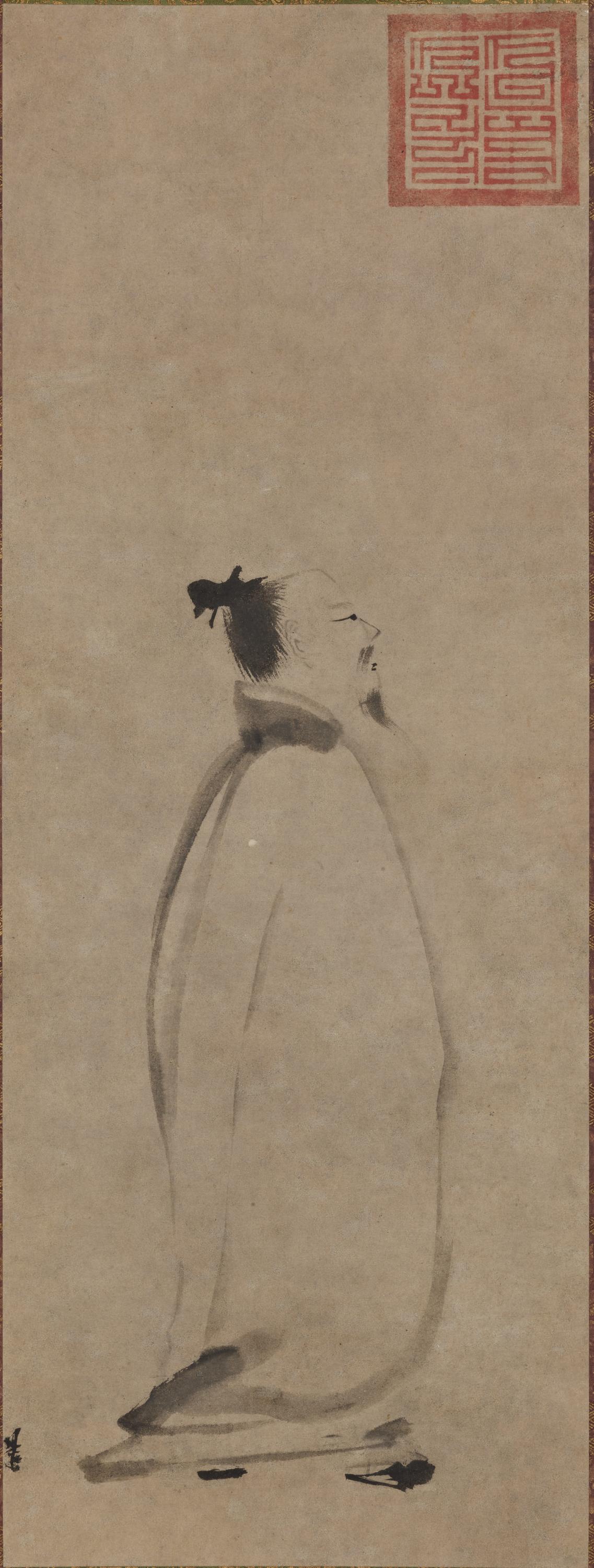
Image: Wikimedia Commons / Public Domain.
Three Starting Points
Greek Dionysus
From Orphic mystery rites to Attic tragedy, Dionysus is the god who is torn apart and returns. At the Great Dionysia each spring in Athens, the trilogy of tragedies performed on stage had, at its true center, the chorus; the protagonists were latecomers “differentiated” out from the chorus.
The Daoist “Non-Action”
Laozi says, “in pursuing the Dao, daily diminish”; Zhuangzi says, “I have lost myself” (吾丧我). This tradition does not oppose labor or society; it opposes the “false self” layered on by ritual and interest. Subtract what has accumulated, and what is left is the original self flowing with the Dao.
Li Bai’s “Solitary Drinking”
The High-Tang poet Li Bai was initiated as a Daoist priest and spent his life moving between Confucian order and Daoist freedom. His “drunkenness” is the metaphysical exit after worldly failure — not despondency but an ontological posture of drinking with heaven and earth. As Yu Guangzhong put it: “Wine entered the heroic gut, and seven-tenths of it turned to moonlight.” This is not hyperbole.
A Common Skeleton
All three traditions start from “the enclosure of the everyday self,” seek release in a state of “temporary departure from that enclosure,” and entrust that state to some rhythm — the Greek chorus, the Daoist breath / water, the Tang gexing of Li Bai.
A True Difference
Nietzsche’s Dionysus carries blood, attended by the dismemberment and return of tragedy; Daoism is more like water — non-resisting, non-conflictual, slow to seep in; Li Bai stands between — possessing the brightness of the Dionysian (tragic clarity lurking inside “satisfaction”) and the lightness of xiaoyao (free roaming). Structural similarity is not content identity.
Resonating Core Concepts
Dissolution of Principium Individuationis
Nietzsche’s core proposition: the Apollonian gives the world form and boundary; the Dionysian melts those boundaries temporarily. Zhuangzi’s “transformation of things” and Li Bai’s “three persons with my shadow” provide two Eastern versions of the same gesture — one quiet, one bright.
Drunkenness as Ontological Posture
All three traditions refuse to reduce “drunkenness” to alcohol content. It is the way of stepping out of time measured by instrumental reason, the way the body briefly returns to rhythm. A philistine who has been drinking is not “drunk”; Zhuangzi and Nietzsche, sober, are both “drunk.”
Xiaoyao you / Dionysian Wandering
Zhuangzi’s Peng-bird crosses to the southern darkness; Nietzsche’s Zarathustra descends from the mountain — East and West alike use “wandering” to depict the spirit after the dissolution of individuation. Common features: refusal of teleology, affirmation of the road, companionship with heaven and earth.
Ziran ↔ Amor Fati
Ziran (自然) literally means “so of itself” — Daoism’s highest category; Nietzsche’s amor fati (love of fate) means “not merely bearing necessity but loving it.” Both refuse to slice the world into “ought” and “ought not” — taking what occurs as that-which-was-to-occur.
Suffering: Affirmation vs Dissolving
Here the divergence is real. Nietzsche insists that suffering must be faced and affirmed — “everything great is born of unhappiness”; Zhuangzi tends to re-see suffering until it dissolves (“rest in your time and follow the way of things; sorrow and joy cannot enter you”). Li Bai oscillates between the two — which is how he is able to write “white hair three thousand zhang long,” a line that both affirms and dissolves.
The Primacy of Rhythm
The stamping foot of the Greek chorus, the breath of the Chu Ci, the surging Tang gexing of Li Bai, the parallelisms of the Dao De Jing — all three traditions place “rhythm” before “concept.” Philosophy does not happen in concepts; it happens when the body walks alongside language.
Five Cases
CASE 01 · Bring in the Wine — A Cup Held in the Face of Time
Drunkenness as ontological posture / the suspension of time.
“Do you not see the Yellow River, born of heaven, rolling to the sea and never to return? Do you not see the white hair before the bright hall mirror, like dark silk in the morning turning to snow by dusk?” Li Bai’s opening lines are not rhetoric but a set of metaphysical statements: water is one-way, hair is one-way, time is one-way. This is tragic clarity — the same clarity as Nietzsche’s “looking into the abyss” — not “lament of spring” in any romantic sense.
It is upon that clarity that “bring in the wine, do not stop the cup” can stand. Drinking in this poem is not a pastime; it is a posture against time: when external time flows one way and cannot be turned back, the few ounces of liquid in the cup are made into a pivot against it. This is close to Nietzsche’s Dionysian state — not numbing escape but, “having faced impermanence directly, still saying yes to life.” “Heaven made my talents — they must be put to use; spend all the gold and it will come back again” is not optimism but a Tang version of amor fati.
This celebrated Liang Kai portrait, in a handful of brushstrokes, has no table and no cup; only a figure striding and chanting. Which is precisely the point: for Li Bai, “drunkenness” is not a physical state but a gait. It is the way of stepping out of measured time.
CASE 02 · Zhuang Zhou’s Butterfly Dream — Dissolution of Principium Individuationis
Principium individuationis / the transformation of things.
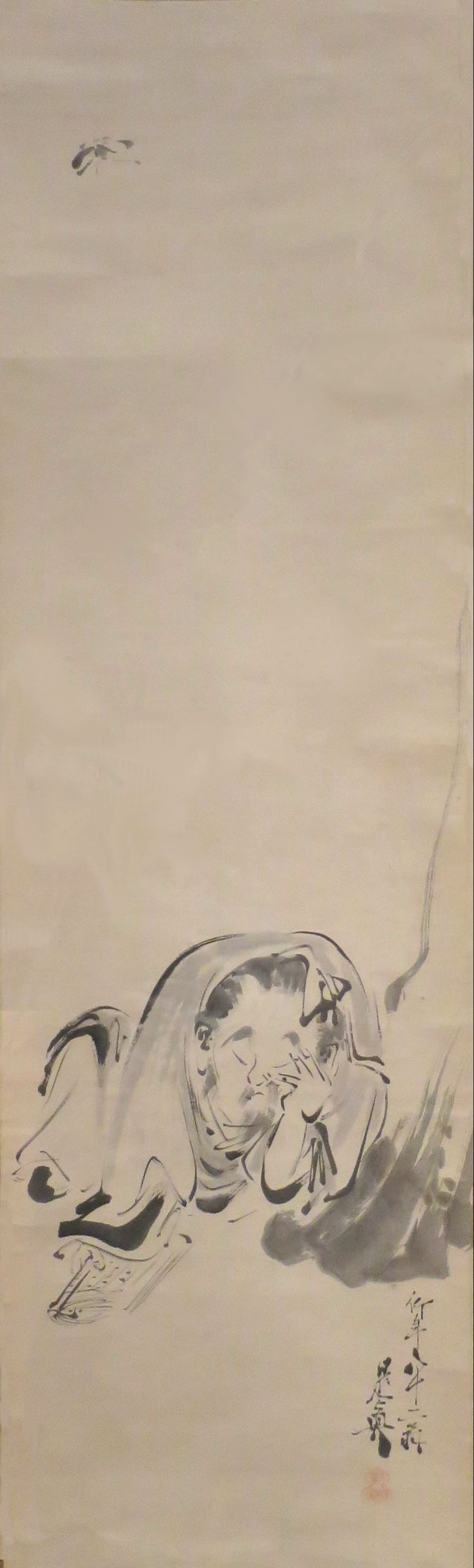
The closing passage of the Qiwulun: “Once upon a time, Zhuang Zhou dreamt he was a butterfly, fluttering as a butterfly, content with his lot, not knowing he was Zhou. Suddenly he awoke, and there he was, solidly Zhou. He did not know whether Zhou had dreamt the butterfly or the butterfly was dreaming of Zhou. Yet between Zhou and the butterfly there must be a distinction — this is what is called the transformation of things.”
In §1 of The Birth of Tragedy Nietzsche defines the Dionysian state: “Under the magic of the Dionysian, not only is the bond between human and human re-forged; estranged, hostile, or enslaved nature also celebrates its reconciliation with its lost son, man.” He calls this moment the “collapse of principium individuationis” — the principle by which an individual is this individual breaks down.
The “transformation of things” and the “collapse of individuationis” are of course not the same — what Zhuangzi describes is a waking person seeing through the hidden premise of “who am I?” without violence, without ecstasy; what Nietzsche describes is the washing-out of body-to-body boundaries in the chorus song. But both point to the same discovery: what we take in daily life to be most solidly real — the “I” — is in fact a fragile arrangement. The butterfly flies clear-headedly; Dionysus dances tremblingly — both have leaked out of the seemingly firm “I.”
CASE 03 · The Dionysian Procession — The Original Unconcealment of the Greeks
Dionysus / The Birth of Tragedy.
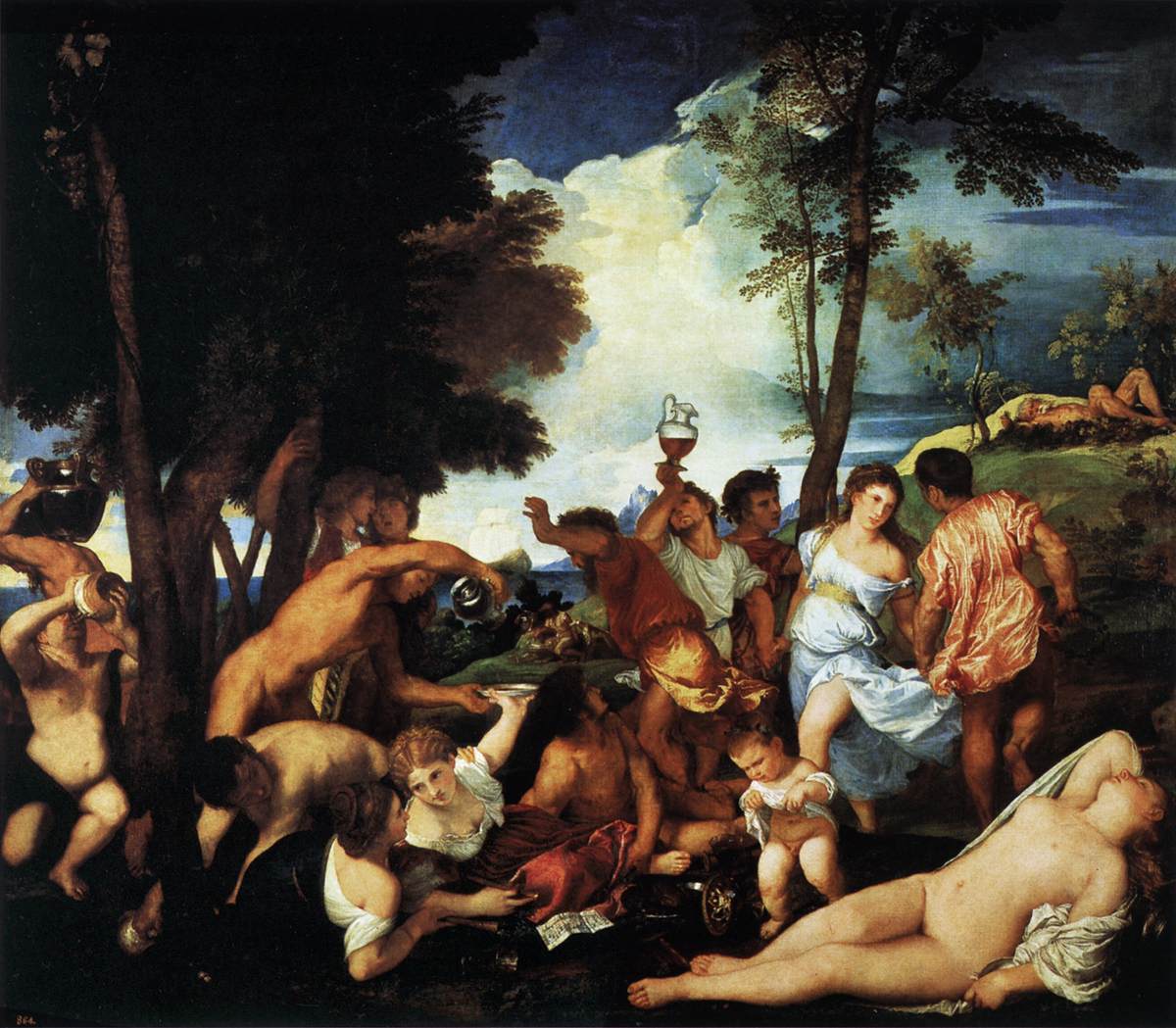
Nietzsche’s Dionysian spirit does not come from the tavern; it comes from the Athenian tragic stage of the 5th century BCE. In The Birth of Tragedy he says repeatedly: Greek tragedy is not a literary genre but the remains of ritual — the chorus standing at center stage is tragedy’s true subject; protagonists and dialogue are secondary characters later “differentiated” out of the chorus.
And where did the chorus come from? From the country Dionysian rites, where men in goatskins, singing hymns and stamping in step around an altar, performed together. “Tragedy” (tragōidía) literally means “goat song.” What the Greeks did on that night was not watch a play but collectively, for a time, give up themselves. When everyone sang together, stamped together, donned masks together, no one any longer was Mr. So-and-So in particular; they were all the chorus together.
Nietzsche’s pivotal proposition: the Apollonian gives the world form, individuality, contour — the world of sculpture, epic, and dream; the Dionysian melts all those boundaries away. True tragic art is the temporary fusion of the two: original force at its least sober is held inside form at its most sober (drama). Both halves are indispensable. Renaissance and post-Renaissance Western painters (Titian, Caravaggio, Rubens, Velázquez) returned to the Dionysian theme again and again — what they painted is not just feasting but nostalgia for that primordial unity.
CASE 04 · Drinking Alone Under the Moon — “Three Persons” and the Self as a Bundle
Multiplicity of the self / drinking with heaven and earth.
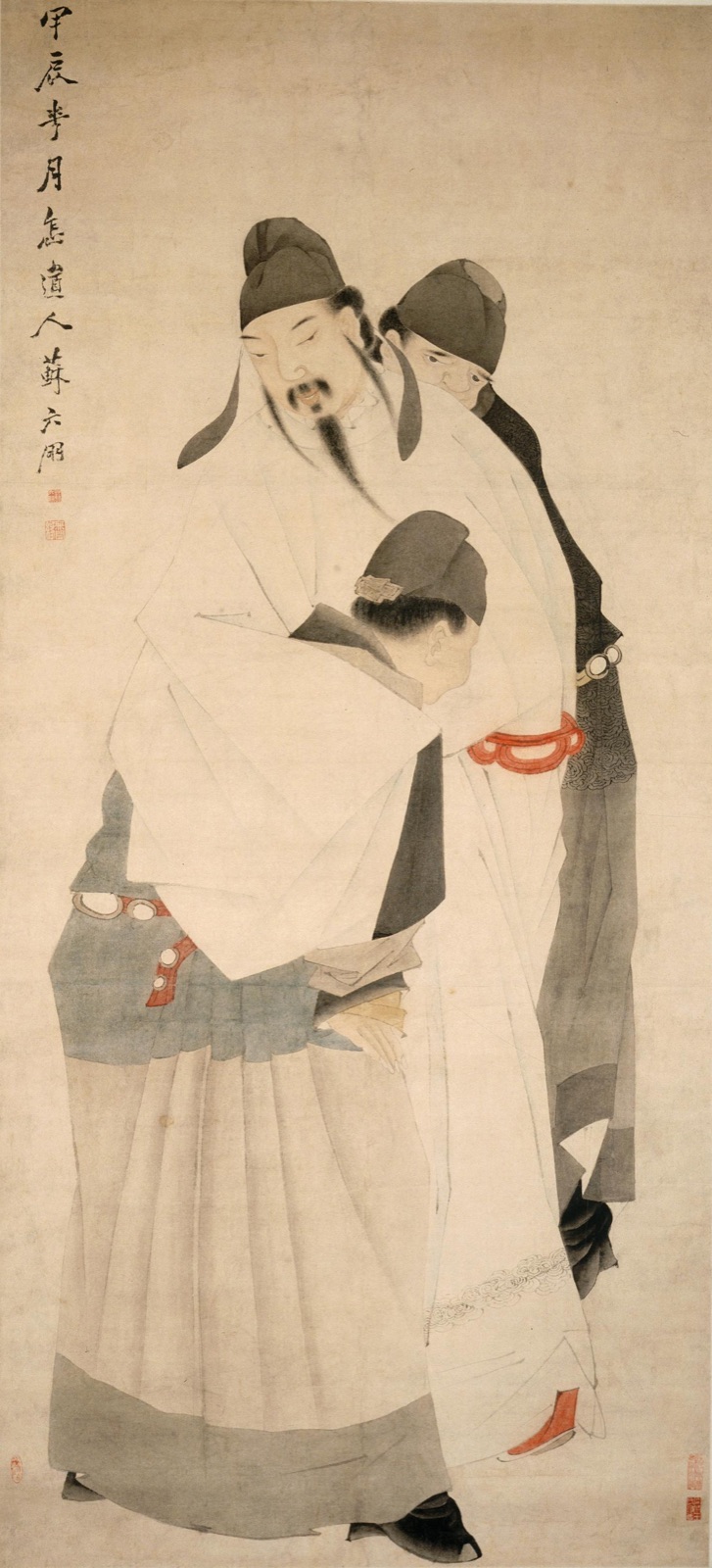
“Amid the flowers, a pot of wine; alone I drink, no one near. Raising the cup, I invite the bright moon — facing my shadow, we make three.”
The miracle of this poem is in the fourth line. Li Bai is drinking alone — in principle there is one person on stage; he lifts the cup to invite the moon, and a second arrives; the moonlight casts his shadow on the ground, and a third appears. The original “self” is in that moment divided into three. This is one of the earliest and most beautiful enactments in Chinese poetry of the “bundle theory of self” — a thousand years before Hume parses the “I” into “a bundle of perceptions.”
But the “deconstruction” here is not skeptical. Li Bai does not ask, as Hume does, “where is the I?”; rather, having conceded that “I am not so solid,” he turns the concession into joy: since “I” can be parsed into three, then drink with these three — “I sing, the moon hovers; I dance, the shadow flickers.” This is precisely the spirit of the Daoist xiaoyao you: the dissolution of individuation is not weightlessness but the winning of a larger frame in which one drinks with heaven and earth. Compared with Nietzsche’s Dionysus, there is less dismembering violence and more clarity of the poet.
CASE 05 · The Seven Sages of the Bamboo Grove — The Closest the Three Have Come Together
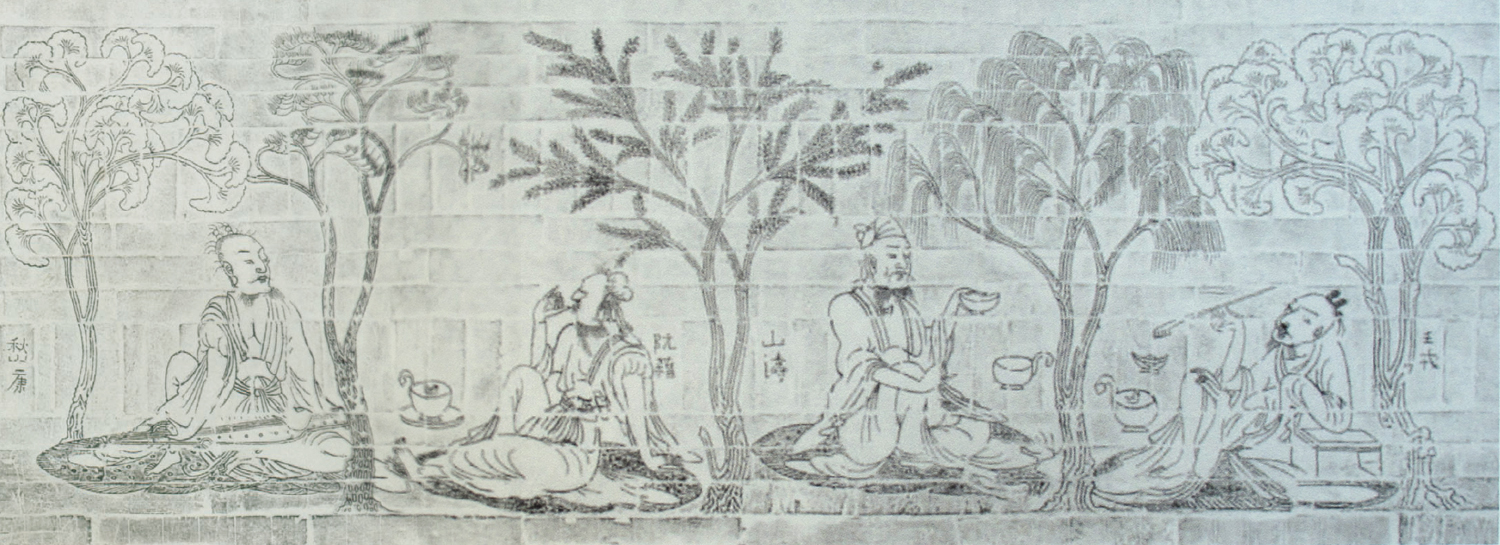
Daoism + drinking + music + anti-ritualism.
The Seven Sages of the Bamboo Grove of the Wei-Jin period — Ji Kang, Ruan Ji, Shan Tao, Xiang Xiu, Liu Ling, Wang Rong, and Ruan Xian — are the historical community in China closest to “the Dionysian spirit + Daoism + poetry.” They retreated together to the bamboo groves of Shanyang to drink, play the qin, hold “pure conversation,” and mock ritual. Liu Ling wrote The Ode to the Virtue of Wine, declaring himself one for whom “heaven and earth are a single morning, ten thousand ages a moment, the sun and moon are window-grills, the eight directions a courtyard path.” That sentence could be transplanted into Thus Spoke Zarathustra almost without a word changed.
Before his execution Ji Kang asked for his qin and played Guangling San, sighed “Guangling San is now lost,” and met death calmly — a Dionysian death: in the most complete clarity, bearing what cannot be borne, while a piece of music becomes the form of that moment (which is what Nietzsche calls the fusion of “Apollo + Dionysus”). When Ruan Ji heard of his mother’s death he finished a chess game, then wept and vomited blood — on the surface a violation of ritual; at the core, returning the “grief” prescribed by ritual to the reality of bereavement.
In the molded-brick mural in the Eastern Jin tomb at Xishan Bridge in Nanjing, the seven sages are placed together with the still earlier hermit Rong Qiqi; each is paired with a tree and an object (qin, wine, zhuwei fly-whisk), each in a different posture, yet all share a common cadence. It is one of the earliest works in world art history to present “a philosophical community” as a pictorial subject — and it is also the closest these three ways of “being drunk” have come together in Chinese soil.
Misreadings and Counters
Not an “Orientalist” Folding
Nietzsche never read Li Bai; Zhuangzi did not know Dionysus. What this piece discusses is structural parallel, not historical contact. To declare them “the same thing” is the 19th-century European Orientalist habit, which this piece opposes.
Dionysian ≠ Drunken
Nietzsche explicitly opposed the numbing escape of alcohol — what he wanted was the “sober drunkenness,” in which the most primordial force is held inside the most sober form (Greek tragedy, Zarathustra’s verse). Getting drunk and acting out is not the Dionysian; it is its opposite.
Daoism ≠ Total Withdrawal
What Zhuangzi mocks is the “I” hollowed out by ritual, not labor or community themselves. The cook Ding cutting an ox, Wheelwright Bian carving a wheel, the ferryman handling his boat — many of the best stories in Zhuangzi happen at sites of work. Xiaoyao is not “not working”; it is keeping rhythm within the work.
Li Bai ≠ a Romantic Poet
To read Li Bai as a “freely lyrical” poet in the 19th-century European sense is a double dislocation. Within his “unbound” voice runs strong political failure (the Prince Yong Li Lin affair, exile to Yelang) and Confucian-Daoist interweaving; his “drinking alone” is a metaphysical response to the failure of the established order, not personality flaunting.
Reading Order
Originals — Just These Are Enough
- Nietzsche, The Birth of Tragedy — first 9 chapters
- Zhuangzi · Inner Chapters — Qiwulun, Da Zongshi, Xiaoyao you
- Li Bai — Bring in the Wine, Drinking Alone Under the Moon, Song of Xiangyang, Hard Roads to Travel
Li Bai Deeper Reading
- Stephen Owen, The Great Age of Chinese Poetry: The High Tang — Li Bai chapter
- An Qi, Complete Works of Li Bai, Annotated by Year
Nietzsche Deeper Reading
- Nietzsche, Thus Spoke Zarathustra — Book 1
- Walter Kaufmann, Nietzsche: Philosopher, Psychologist, Antichrist — Chapter 5, “The Dionysian Faith”
Comparative Perspectives
- Zong Baihua, Strolls in Aesthetics — the earliest Chinese scholar to place Zhuangzi and Nietzsche side by side
- Liu Xiaofeng, Salvation and Free Roaming
- A. C. Graham, Disputers of the Tao
- Hall & Ames, Anticipating China
Back to the Eight Chapters
- Nietzsche’s place in European intellectual history → The Western Philosophy Lineage
- Daoism and the overall topology of Chinese philosophy → Eastern Philosophy
References — Li Bai · Daoism · Nietzsche
Li Bai
- Li Bai · Wikipedia — life and works overview. en.wikipedia.org
- Li Bai · Britannica — academic entry. britannica.com
- Li Bai (李白) · Poetry Foundation — selection of English-translated poems. poetryfoundation.org
- Stephen Owen, “The Great Age of Chinese Poetry: The High Tang” — the authoritative study of High Tang poetry. quirinpress.com
Daoism
- Zhuangzi · Stanford Encyclopedia of Philosophy. plato.stanford.edu
- Zhuangzi (book) · Wikipedia overview. en.wikipedia.org
- Laozi · Stanford Encyclopedia of Philosophy. plato.stanford.edu
- Daoism · Stanford Encyclopedia of Philosophy. plato.stanford.edu
Nietzsche
- Friedrich Nietzsche · Stanford Encyclopedia of Philosophy. plato.stanford.edu
- The Birth of Tragedy · Wikipedia — Dionysian and Apollonian. en.wikipedia.org
- Apollonian and Dionysian · Wikipedia. en.wikipedia.org
- Walter Kaufmann, “Nietzsche: Philosopher, Psychologist, Antichrist” · Princeton University Press — the classic English-language Nietzsche study. press.princeton.edu