Foreign Exchange — A Primer
The foreign exchange market is the world’s largest, deepest, and longest-trading financial market — daily turnover exceeds $7.5 trillion, sleepless 24 hours. But it’s also the most-misunderstood by beginners: no central exchange, no “limit up/down,” priced in pairs rather than absolute units, and layered on top with leverage, overnight interest, and spreads. This guide arranges the structure, quotation conventions, price drivers, common strategies, and classic pitfalls of FX markets into a primer you can return to — learn the language first, then talk strategy.
Framework — the 10-minute FX framework
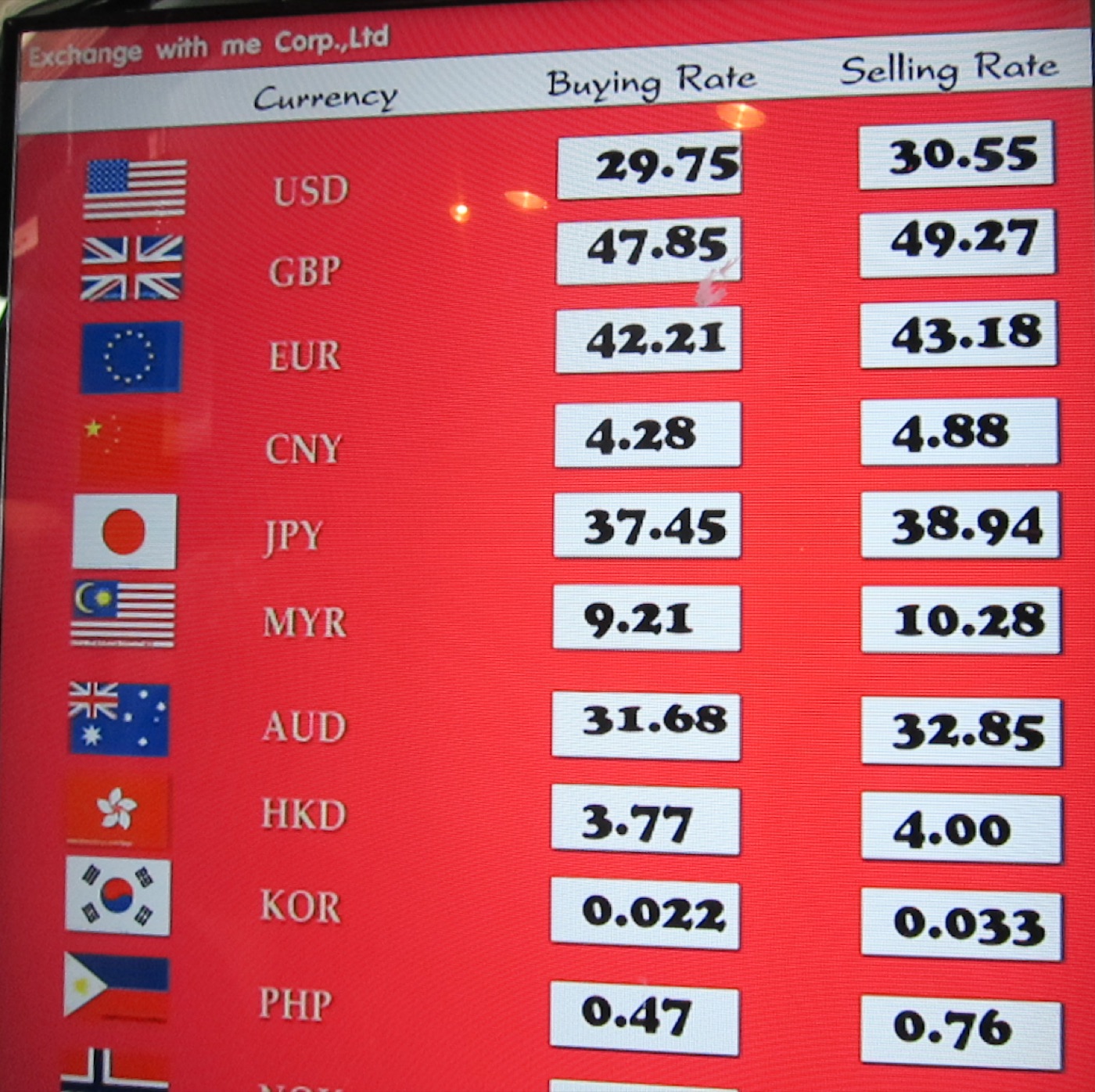
Image: Wikimedia Commons / CC BY-SA 2.0.
“Foreign Exchange” (FX / Forex) is essentially the relative price of two currencies. Buying EUR/USD = simultaneously going long euros and short dollars — no FX trade is ever a one-sided hold of an “absolute value”; it’s always two-way relative. That’s the most fundamental difference between FX and equities.
Unlike stocks, FX is an over-the-counter (OTC) market — no “New York Stock Exchange” style central matching venue. The interbank market among hundreds of major banks worldwide is the true “primary price source”; downstream retail brokers, ECNs, and institutional platforms all mark up and distribute prices originating there.
- Market size and structure. The BIS Triennial Survey is the authoritative benchmark. In 2022 daily volume was $7.5T, of which spot is only ~28% — forwards + swaps account for 60%+. Pure “speculation” is only a small piece of FX. Main trading centers: London 38% · NYC 19% · Singapore 9% · Hong Kong 7%.
- Who trades. Four participant groups: ① central banks (intervention, reserve management); ② commercial banks (market-making + prop); ③ multinationals (trade, hedging); ④ funds + retail (speculation). The retail quote on a broker is essentially the “residual” of trades from the first three. Over 80% of daily volume comes from non-retail; retail is a “price taker.”
- Trading hours. 24×5 (closed on weekends). Rotates by time zone: Sydney → Tokyo → London → New York. The London-New York overlap (21:00-01:00 Beijing time) has the highest liquidity, and is the main venue for news-driven moves. The daily “London Fix” at 16:00 London time = key institutional rebalancing window.
- What determines price. Long-term, Purchasing Power Parity (PPP) + Interest Rate Parity (IRP); medium-term, central bank policy + balance of payments; short-term, data releases + risk appetite + positioning + liquidity. Different time scales, completely different dominant factors. See “Pricing Drivers” section.
- Why leverage exists. Major currency pairs typically move 0.5-1% per day, so unleveraged annualized vol is only 7-10% (lower than equities). Brokers offer 10-100× leverage, turning “low-vol assets” into “high-yield + high-blowup products” — for retail, leverage is risk itself, not opportunity itself. US retail mainstream 50:1, EU ESMA max 30:1, Japan 25:1.
- Three differences from equities. ① Always “two-way relative” — no “absolute valuation”; ② Central banks are the ultimate players, with no equivalent counterparty for a single stock; ③ Liquidity tiers by pair, EUR/USD spread 0.2 pip, ZAR/TRY can be 50 pips. Always start practice with major pairs.
Bottom Line · Understand “currency pairs as two-sided bets” first, then talk strategy.
Most beginners lose money on “I think the dollar will weaken” — but you can never short the dollar alone; you must go long some counter-currency. If EUR is also weakening (just more slowly than USD), EUR/USD will actually fall. Think of every trade as “is A running faster or slower than B” rather than “A is going up / down.”
Currency Pairs — majors, crosses, exotics
Roughly 180 fiat currencies exist globally, combinable into tens of thousands of pairs. But 95% of volume concentrates in fewer than 20 pairs. By liquidity and dollar participation, the industry splits into three tiers: Majors, Crosses, Exotics.
| Category | Examples | Features | Spread (mainstream broker) | Daily Range |
|---|---|---|---|---|
| Majors | EUR/USD, USD/JPY, GBP/USD, USD/CHF, AUD/USD, USD/CAD, NZD/USD | The seven major pairs that have “one leg in USD.” Deepest liquidity, narrowest spread, broadest news coverage. | 0.1-1.5 pip | 50-100 pip |
| Crosses | EUR/GBP, EUR/JPY, GBP/JPY, AUD/JPY, EUR/CHF, CHF/JPY | Combinations of major currencies without USD. GBP/JPY is the “beast” with extreme volatility; EUR/CHF is “most watched by the Swiss central bank.” | 1-4 pip | 80-200 pip |
| Exotics | USD/TRY, USD/ZAR, USD/MXN, USD/CNH, USD/INR, USD/BRL | Emerging market currencies. Wide spreads, high overnight interest, big political risk. Suitable for hedging exposure, not for speculative beginners. | 10-100+ pip | Possibly 3-10% in a day |
| Offshore RMB (CNH) | USD/CNH (issued offshore in addition to onshore CNY) | Hong Kong opened the gate in 2010. CNH is freely priced by markets; CNY is managed by the PBOC’s fixing + ±2% band. CNH vs CNY spread = capital-flight pressure gauge. | 3-10 pip | 200-500 pip |
| Metals (FX-quoted) | XAU/USD (gold), XAG/USD (silver) | Not fiat, but ubiquitously quoted on FX platforms; pricing unit is “ounce” rather than “currency unit.” | 20-40 cents | $20-50 |
One image to understand the “base currency / quote currency”
EUR/USD = 1.0850 meaning: buying 1 euro costs 1.0850 USD. Left EUR = Base Currency, right USD = Quote Currency. Long EUR/USD = long euros + short dollars.
— the order of base / quote cannot be reversed
Major ordering follows convention: USD is usually second (e.g., EUR/USD, GBP/USD), but for USD/JPY, USD/CHF, USD/CAD, USD is first. This isn’t “stronger comes first” but historical market convention.
Crosses (non-USD pairs) typically order “stronger currency first”: EUR/GBP, EUR/JPY, GBP/JPY; JPY/EUR never appears as a notation.
Direction: a rise = left currency appreciating versus right currency. Long USD/JPY rising = USD appreciating vs JPY = JPY depreciating.
Quotes and Spreads — the mechanics of a quote
A beginner’s first reaction to an FX quote is “which price should I use?” — because two prices appear at the same moment: Bid (buy price) and Ask (sell price). To buy, use Ask; to sell, use Bid. The difference = Spread.
Example · EUR/USD. Bid 1.0849 / Ask 1.0850, Spread = 1 pip. Buy 1 lot (100K EUR) → pay $108,500. Hold to 1.0880, close (sell) → receive $108,800. Gross +$300 / 30 pip. After spread & commission, net ≈ $290.
Pip is the smallest unit in FX. Most pairs are at the 4th decimal place — 1.0849 → 1.0850 is up 1 pip. JPY-quoted pairs (USD/JPY, EUR/JPY) differ: because JPY’s denomination is large, pip is at the 2nd decimal (148.12 → 148.13 is up 1 pip).
Pipette / Fractional Pip: a finer tenth-of-a-pip; modern platforms commonly quote to this digit (the last 5 in 1.08495 is the pipette).
Lot: the standard contract unit. 1 Standard Lot = 100K base currency, 1 Mini Lot = 10K, 1 Micro Lot = 1K. Retail typically starts with Micro or Mini.
How much is 1 pip? For EUR/USD 1 Standard Lot = $10 / pip; Mini = $1 / pip; Micro = $0.10 / pip. This is the formula you must internalize.
Quote Glossary
- Bid · Bid Price. The price at which the bank is willing to “buy” base currency from you. You sell at the Bid. Always lower than Ask.
- Ask / Offer · Ask Price. The price at which the bank is willing to “sell” to you. You buy at the Ask. Always higher than Bid.
- Spread.
Spread = Ask − Bid. The market-maker’s “implicit commission.” Mainstream brokers’ fixed EUR/USD spread is 1-1.5 pip; variable spread can be as narrow as 0.1-0.3 pip. Examples: EUR/USD 1 pip · GBP/USD 1.5 pip · GBP/JPY 3-5 pip · USD/TRY 30-100+ pip. - Pip · Percentage in Point. Smallest move unit for a currency pair. Non-JPY pairs = 4th decimal; JPY pairs = 2nd decimal.
- Pipette · Fractional / Tenth of a Pip. Modern platforms quote to the 5th digit; the last is the pipette (1/10 pip). On news releases, you can see prices “fly” dozens of pipettes.
- Lot · Contract Unit. Standard = 100,000; Mini = 10,000; Micro = 1,000; Nano = 100 (rare). Orders are placed in lots. “I bought 1 lot of EUR/USD” = bought 100,000 euros.
- Pip Value.
Pip Value = Lot × 1 pip. Example: 100,000 × 0.0001 = $10 (for EUR/USD). The basis for calculating P&L and risk control. Pip value of non-USD-quoted pairs must be converted to account currency. - Slippage. Difference between order price and actual fill. Most obvious during fast markets / NFP / central bank decisions; stop orders can be “pierced through” by gap moves.
- Requote. A market-making broker may reject your original quote during fast moves and offer a new one. ECN platforms have no requotes but do have slippage.
FX Products — spot, forward, swap, futures, option
“Buying FX” actually means five different products. Corporates mainly use forwards and swaps for hedging; retail mostly trades spot (CFD); ETFs / futures are another arena for institutions; options are tools for tail-risk hedging.
- Spot · Spot FX · T+2 Spot FX. “Agree price today, settle within two business days” (USD/CAD is the exception at T+1). What retail sees on MT4 / MT5 platforms is almost always “perpetually rolling spot” — the platform actually “rolls” your spot position each day to the next spot day (the source of overnight interest). EUR/USD spot is ~28% of FX volume.
- Forward · Outright Forward.
Fwd = Spot × (1 + r_quote × t) / (1 + r_base × t). “Price agreed today, settled at a future date.” Price is determined by the two interest rates + time, not by a forecast of future spot. The primary hedging tool for corporate AR/AP. - FX Swap. Simultaneously executes a spot + reverse forward. Essentially using one currency as collateral to borrow another for a period — the single largest product in FX markets, 50%+ of total volume.
- NDF · Non-Deliverable Forward. For currencies under exchange controls (CNY, INR, BRL, KRW, TWD) that can’t be freely delivered across borders, the market uses NDFs to lock the rate, settling only the differential in USD. The spread between USD/CNH and USD/CNY NDF = capital-control pressure gauge.
- Futures · FX Futures (CME). CME Chicago Mercantile Exchange standardized contracts: 6E (EUR), 6J (JPY), 6B (GBP), 6A (AUD), etc. Centralized clearing + public positions report (COT) is an important window into institutional positioning.
- FX Options. Grants the buyer the “right but not the obligation” to buy/sell currencies at an agreed rate in the future. The Risk Reversal quote = call vol − put vol — an important indicator of market sentiment for a pair.
- CFD · Contract for Difference. The standard product retail brokers use. No real currency settlement — only the differential is settled. Convenient, but with three costs: spread, overnight interest, broker counterparty risk. CFDs aren’t allowed in the US; regulation requires spot or futures.
- FX ETF. UUP (DXY long), FXE (EUR long), FXY (JPY long), etc. No leverage, no overnight interest, but with tracking error and management fees (0.4-0.8%). Better than CFDs for long-term positions.
How to choose products · Use determines vehicle, not vice versa.
- Short-term speculation (intraday / weekly): CFD / Spot — pros: flexible leverage, low entry threshold, but spread + slippage eats most theoretical profit
- Medium-term direction (monthly / quarterly): FX ETF or CME futures — transparent pricing + no overnight interest + stronger regulation
- Hedging real exposure: forwards / swaps / options — matched to actual cash flow tenor and amount; not chasing profit but locking in
- Tail hedging: buy OTM options — small premium protecting against extreme moves (e.g., USD tail crash)
Pricing Drivers — what moves a currency
A currency’s “value” is determined by a long string of interacting factors. Different time scales have completely different dominant factors — intraday: liquidity + data; monthly: central bank moves; quarterly: balance of payments; yearly: PPP. Confuse this hierarchy and you’ll be slapped by the market regularly.
Long-Term · PPP and Interest Rate Parity
- PPP · Purchasing Power Parity. Long-term FX → difference in two countries’ inflation rates. “The same good should cost the same in different countries.” The Big Mac Index is the popular version. Long-term, high-inflation countries’ currencies depreciate (Turkish lira is the classic).
- IRP · Interest Rate Parity.
Fwd/Spot ≈ (1+r_quote)/(1+r_base). Covered IRP says: forward FX is fully determined by the risk-free rate differential, not by “forecasting” the future — otherwise arbitrage would eliminate any deviation. - REER / NEER · Real / Nominal Effective Exchange Rate. Trade-weighted basket FX. REER deviation > 10% from long-term average should warn of reversal — the IMF’s annual REER valuation report is an important reference.
Medium-Term · Central Banks and Balance of Payments
- Rate Differential. The #1 driver of medium-term FX moves. The direction of the two countries’ 2Y Treasury yield differential determines pair direction: Fed hikes + BoJ on hold = USD/JPY rising. Example: 2022 USD/JPY from 115 to 150 — entirely driven by widening Fed-BoJ differential.
- BoP · Balance of Payments. Current account (trade) + capital account (cross-border investment) + reserves change. Persistent current account surplus = long-term appreciation pressure (structural for Japan, Germany, China).
- Real Yield.
Real = Nominal − Inflation Expectation. Currencies with high real yields have a “carry advantage.” Gold and USD often compete for the same “real yield” seat — rising real yields = strong USD + weak gold. - Terms of Trade. Ratio of export to import prices. Commodity exporters (AUD, NZD, CAD, NOK, BRL) have currencies highly correlated with commodity prices.
- Capital Flow. TIC data (US), EPFR, China SAFE data. Foreigners buying Treasuries / stocks = currency appreciation pressure; outflows = depreciation pressure.
- FX Reserves. Central banks manage FX through “buy USD sell local” or vice versa. EM countries with reserves / GDP < 15% are weak in absorbing external shocks.
Short-Term · Data, Sentiment, Liquidity
- Data Surprise. Actual vs Bloomberg consensus. Deviation 1σ+ from consensus immediately reflects in price. NFP, CPI, Core PCE, retail sales, PMI are the five “must-watch.”
- Risk On / Off. Risk-On: high-beta currencies (AUD, NZD, EM) lead; JPY / CHF / USD sold. Risk-Off is the reverse. VIX is the most convenient observation indicator.
- Safe Haven. Traditional safe havens: USD / JPY / CHF + gold. Every systemic risk event sees the three rise together. Verified in 2008 / 2020 / 2022.
- Positioning. CFTC COT released Fridays. Extreme speculative positioning (historical 90%+) is typically a reversal signal. 2024 JPY short extreme triggered a fast short squeeze.
- Month-end Fix. Funds rebalance month-end; liquidity expands around WMR 4pm London Fix. If US equities surged month-end, institutions often sell USD and buy foreign currencies to rebalance.
- Flow · Order Flow. Direction of large orders (real money / hedge funds). Retail can’t see, but can reverse-infer from broker “client positioning ratios” (“retail heavily long = typically going down”).
Calendar and Central Banks — the FX event calendar
Macro data drives FX’s short- to medium-term volatility. Each month, mark roughly 10 “must-watches” on the calendar. 15 minutes before a release, flatten short-term positions or at least widen stops — NFP can make EUR/USD jump 50 pips in 1 second.
| Data / Event | Source | Frequency · Time (UTC) | Impact |
|---|---|---|---|
| NFP · Non-Farm Payrolls | US BLS | First Fri/month, 12:30 UTC | The single biggest FX event globally. Employment + wage growth set Fed expectations. |
| CPI | US BLS · EU Eurostat · UK ONS · Japan MIC | Monthly | Core CPI MoM is the main observation point. Beating by 0.1pp moves USD 0.5%+. |
| FOMC | Federal Reserve | 8x/year, 18:00 UTC | Rate decision + dot plot (quarterly) + Powell press conference. Three-phase moves: statement → dots → press conference. |
| ECB | European Central Bank | 8x/year, 12:15 UTC | Rate decision + Lagarde press conference. Forward guidance has flipped frequently in recent years; every word change is dissected. |
| BoE | Bank of England | 8x/year, 11:00 UTC (Thursdays) | Rate decision + vote distribution + minutes simultaneously. Large 9-member splits amplify GBP vol. |
| BoJ | Bank of Japan | 8x/year, ~03:00 UTC | After exiting YCC + negative rates in 2024, entered “slow hiking” channel; every meeting now keeps JPY traders on edge. |
| Retail Sales | US Census | Monthly, 12:30 UTC | Monthly pulse of consumption. “Control Group” goes into GDP weight — watch that, not the headline. |
| PMI | S&P Global · ISM | Monthly flash + final | 50 is the expansion/contraction line. Eurozone PMI leads ECB policy by 2-3 months. |
| GDP | National BEA / Eurostat | Quarterly, 3 releases (Advance → Second → Final) | Annualized QoQ vs YoY are different conventions. Markets react most strongly to the Advance read. |
| PCE | BEA | Monthly | The Fed’s “preferred” inflation gauge. Core PCE YoY targets 2% — above 2.5% maintains hawkish stance. |
| Jackson Hole | Kansas Fed | Late August | Fed chair’s “academic-venue” speech; resets the year’s policy tone — Powell’s 2022 “shorter & more painful” speech crushed risk assets. |
| G7 / G20 | Finance ministers’ meetings | Irregular | Watch joint statements for the phrase “excess volatility” → Japan / others intervention warning. |
| JOLTS / ADP | US BLS / ADP | Monthly | ADP 2 days before NFP, not very reliable but affects NFP expectations; JOLTS job openings reflect labor market depth. |
Pro Tip · Data ≠ moves; convention + consensus is what makes the move.
Whether CPI YoY 3.2% is bullish or bearish depends on what consensus was: consensus 3.4%, actual 3.2% = surprise slowdown → USD down; consensus 3.0%, same 3.2% = surprise acceleration → USD up. Get “data direction + deviation from consensus” both clear before you can correctly interpret price reaction.
Trading Mechanics — leverage, margin, carry
The core difference for FX retail trading is leverage + margin + overnight interest. These three mechanisms turn an originally “low-vol” asset into a “high-emotional-drain” product. Understanding them matters more than any strategy choice.
- Leverage.
Leverage = Position size / Margin. Example: 100K EUR / $3,300 margin ≈ 30:1. Regulators set caps: US 50:1, EU ESMA mainstream 30:1, UK 30:1, Japan 25:1. Offshore high leverage (500:1+) unregulated platforms = high risk. - Margin.
Required Margin = Position Size / Leverage = 100K / 30 = \$3,333. “How much cash collateral is required to open a position.” Used Margin = engaged; Free Margin = remaining available; Margin Level = Equity / Used Margin — falling below 100% enters margin call, below 50% forces liquidation. - Pip Value. Determines speed of loss. EUR/USD Standard = $10/pip; USD/JPY Standard = ~$6.7/pip (because the pip is 0.01 not 0.0001).
- Swap / Rollover · Overnight Interest.
Swap ≈ (r_long − r_short) × position / 365(broker may add a spread). When you hold overnight (17:00 ET in New York), the platform calculates interest based on the differential. Long high-yield currency = receive interest; reverse pays. Short AUD long JPY costs you money every day — the cost of carry. - Triple Swap. Overnight interest on Wednesday positions = 3x (compensating for the weekend). To overnight a strategy, avoid Wednesday or close on Tuesday.
- Stop / TP / Trailing. Every position must have a stop (even wide). Trailing Stop only works locally on the platform — terminating the terminal turns it off; unreliable during major moves.
- Position Size.
Position = (Account × Risk%) / (Stop pip × pip value). Single trade risk ≤ 1-2% of account is the beginner’s iron rule. $10,000 account · 50 pip stop · 1% risk · then each pip is $2 = 2 Mini Lots. - Drawdown. The peak-to-trough decline from historical high net asset value. Retail: a 50% drawdown requires a 100% gain to break even — the psychological burden far exceeds the math.
- VaR · Value at Risk. “95% probability, daily loss won’t exceed X.” Beginners don’t need to compute it, but need to know the max daily move of your portfolio.
The Wound of Leverage · Leverage doesn’t let winners win more — it lets losers lose faster.
Public data: EU ESMA-regulated brokers’ retail losing-account share is 70-80%; US CFTC data is similar. The main reason isn’t “wrong direction,” but:
- Leverage amplifies normal drawdowns to account-blowup territory
- Spread + slippage + overnight interest together “tax” every entry and exit
- Screen fatigue + over-trading: place 20+ orders a day, even a high win rate gets ground down by commissions
Beginner principles: 3 months on demo first; live trading starts with Micro lots ($0.10/pip); single-trade account risk ≤ 1%; monthly trade count ≤ 20.
Strategies — carry, trend, mean-reversion, event
The strategies that truly make money long-term in FX are few, each with clear logic + typical drawdown scenarios. Beginners should first understand each strategy’s “reasons to make money + reasons to lose money,” then talk about choice.
- Carry Trade. Long high-yield currency, short low-yield currency, eat the differential. Historically the classic “no-brain” strategy — but a single black swan can swallow two years of carry. AUD/JPY, NZD/JPY, MXN/JPY were the carry workhorses in their time. 2008 GFC: AUD/JPY fell 40% in a week; carry strategies have worn the “risk-appetite proxy” label ever since. Makes money: stable differential · Loses money: VIX spike.
- Trend Following. Multi-timeframe direction judgment, ride trends for weeks-months. 2022 USD/JPY from 115 to 150 is the classic central bank policy-driven trend — when trends exist, capturing the big move beats any technical indicator. Tools: moving averages (20/50/200), Bollinger bands, MACD, ADX. The key is “confirm the trend is intact,” not “guess the top or bottom.” Makes money: policy divergence · Loses money: chop.
- Mean Reversion. When a pair deviates 1.5-2σ from range mean, bet on reversal. EUR/CHF, USD/CAD and other fundamentally-linked pairs chop more and suit this strategy. Watch out for distinguishing “range valid” from “breakout start” — the first wave of mean-reversion at the start of a trend is exactly where you lose money. Makes money: range holds · Loses money: range breaks.
- Event / News Trading. Short-term plays around NFP / CPI / FOMC. Either place double-sided stop orders 5 minutes before the data (breakout straddle) or wait for the first emotional wave to digest and fade. Extremely unsuitable for beginners: slippage + spread blowouts + false breakouts are the norm. Professional market-makers and HFT have structural advantage. Makes money: big move · Loses money: whipsaw.
- Correlation / Basket. Pair multiple correlated currencies — e.g., long “commodity-currency basket” (AUD + NZD + CAD) vs short “European-currency basket” (EUR + GBP). Diversifies single-currency event risk — essentially betting on a macro theme. Makes money: theme holds · Loses money: theme reverses.
- Hedging. Doesn’t aim for profit — only locks in known risk exposure. An overseas student paying $50K in tuition each year can use forwards / options to lock the rate when expecting USD depreciation. Standard corporate cashflow hedging: layered build by payment schedule, turning the result of FX swings from “unknown” to “known.” Makes money: vol hedged · “Cost” = premium / basis.
How to choose · Strategy matches your time / personality / capital.
- Full-time + high leverage = event + trend, but professional bar is very high
- Part-time research + moderate capital = trend-following with 2-4 week holding period, daily charts dominant
- Long-term passive = FX ETF + basket approach, annual rebalance
- Existing FX cash flow = hedging, not speculation
Major Currencies — USD · EUR · JPY · GBP · CHF · AUD · CAD · CNH
Each currency has “its own fundamental logic.” Below is a quick reference for the top 8 (by share of volume), summarizing personality, dominant factors, and key indicators.
- USD · US Dollar. Global reserve currency · ~88% of FX volume (bilateral measure). The “default currency” of FX. Main observation: Fed policy, 10Y real yields, DXY index (USD vs basket). Safe-haven + carry dual nature, strong both in crises and hiking cycles. Key indicators: Fed Dot Plot · 10Y Real Yield · DXY · NFP · Core PCE.
- EUR · Euro. FX’s second-largest currency · ~31% of volume. Common currency for 20 nations but with relatively conservative policy. ECB lagging the Fed by 1-2 steps is the norm, so EUR/USD medium-term is dominated by US-EU rate differential. Brexit / Italy / German industry can cause structural shocks. Key indicators: ECB Depo Rate · German French CPI · IFO index · southern European bond spreads.
- JPY · Japanese Yen. Safe-haven currency · ~17% of volume. 2013-2023 “super-long zero rate” policy made yen the standard short leg of carry trades. After BoJ exited YCC in 2024, yen flipped from “permanent weakness” to “policy variable.” MoF intervention via BoJ around USD/JPY 160. Key indicators: BoJ Policy Rate · 10Y JGB · Core CPI · Kuroda/Ueda speeches.
- GBP · British Pound. London financial center · ~13% of volume. Also called “Cable” (historically British-US transatlantic cable). More volatile than the euro, 100+ pip intraday common. 2016 Brexit night GBP/USD instantly fell 10% — political risk premium is structural for GBP. Key indicators: BoE Bank Rate · CPI · retail sales · RICS housing survey.
- CHF · Swiss Franc. Safe-haven currency · ~5% of volume. SNB (Swiss central bank) has a historical “psychological floor” for EUR/CHF. 2015-01-15 SNB suddenly removed the 1.20 EUR/CHF floor → EUR/CHF instantly jumped from 1.20 to 0.85, multiple brokers went bankrupt — the biggest overnight FX move in history. Key indicators: SNB Policy Rate · Swiss CPI · EUR/CHF level.
- AUD / NZD / CAD · Commodity Currencies. Export commodities · linked to iron ore / dairy / oil respectively. “Commodity currencies”: AUD ↔ iron ore / coal / copper / China economy; NZD ↔ dairy + tourism; CAD ↔ WTI oil. Currencies highly correlated with commodity prices. Key indicators: iron ore & copper · WTI · China PMI · RBA / RBNZ / BoC decisions.
- CNH / CNY · Chinese Yuan. Managed float · ~7% of volume (rising). Onshore CNY managed by PBOC fixing + ±2% band; offshore CNH freely priced. Widening CNH vs CNY spread = depreciation pressure escalating. PBOC can manage via fixing bias, countercyclical factor, cross-border remittance policy. Key indicators: PBOC fixing · US-China 10Y differential · trade surplus · A/H share discount.
- EM Basket · TRY · ZAR · MXN · BRL · INR. Emerging market currency basket. High yield + high vol. Turkish lira fell 44% in 2021, Argentine peso devalued 50% in one day in 2023 — political + central bank independence + inflation triple risk; no amount of carry compensates. Key indicators: domestic Policy Rate · CPI · FX Reserves · political events.
Pre-Trade Checklist — the pre-trade checklist
Run this list before each entry — if even one item can’t be answered clearly, don’t trade.
Macro and Timing
- What is the trade’s main driver (differential / policy / data / sentiment)?
- What data / central bank events this week affect the position? Avoid or exploit?
- What rate expectations for both central banks are currently priced? How does my view differ?
- What state are the trend / range / breakout of the pair on multiple timeframes (daily / weekly / monthly)?
- Which direction is current risk appetite (VIX / SPX)? Does my position match?
Risk Management and Execution
- Does the position size keep single-trade risk ≤ 1-2% of account?
- Where is the stop? Does it have structural support (prior high/low / technical level)?
- Is the take-profit plan a single target or scaling? Win-loss ratio ≥ 1.5?
- After adding spread + slippage + overnight interest, does this trade still have positive expectancy?
- How long is the expected holding period? Need to avoid Wednesday for triple swap?
- Are there same-direction or highly-correlated positions (AUD + NZD etc.) creating stacked actual risk?
- What’s the current margin level? What does it become after this trade? Sufficient buffer?
- Order type: market / limit / stop? During news, prefer limit to avoid slippage.
- Does the trade journal record entry rationale + expected path + invalidation conditions?
Usage advice · Treat FX as a “risk-management business” rather than a “guess up/down game.”
Top traders may have only 45-55% win rates, but their long-term win/loss ratio > 2:1 — relying not on prediction accuracy but on winning bigger and losing smaller. The biggest beginner mistake is cutting winners short and adding to losers — guaranteed to result in losses.
Common Pitfalls — the usual suspects
- High leverage + small stop = fast stop-outs. Beginners often use 100:1 leverage + 10 pip stops, looking “risk-controlled,” but normal intraday noise is 20-50 pip — stops almost certainly trigger, and then price returns in your direction. Signal: win rate < 40% · stop count > profit count 3×.
- Carry ignores tails. Long high-yield AUD short JPY earns 4-5% carry annualized, but a VIX spike in one week can swallow two years of yield. Carry strategies must include a VIX or implied-vol filter — flat positions when risk appetite turns. Signal: VIX > 25 carry holding = gambling.
- News already priced in. “I think CPI will beat expectations, I’ll buy USD in advance” — the market has already priced in the same expectation. When actual matches consensus, USD actually falls (event-confirmation = position-closing). Signal: already priced in = “Buy the rumor, sell the news.”
- Correlated position stacking. Simultaneously long AUD/USD, NZD/USD, CAD/USD looks like “diversification” but actually all bet on “risk appetite + commodity bull.” When macro flips, three legs lose together. Signal: correlation > 0.7 = one position.
- Weekend gap. News accumulates on weekends; gaps common on Monday open. Holding full leverage into Friday close = gambling. Habit: reduce or flatten on Friday.
- Central bank intervention / black swans. 2015-01 SNB CHF de-peg, 2016 Brexit, 2022 UK mini-budget → GBP crash, 2024 sudden yen intervention — sovereign-level events can pierce stops by 100+ pips. High-leverage accounts go directly to zero. Signal: trading FX during sensitive central bank / political times.
- Unregulated offshore platforms. “500:1 leverage, 0 spread, 50% bonus” — almost always offshore unregulated brokers. Disappearing, refusing withdrawals, manipulating spreads, malicious slippage are the norm. Stick to US CFTC / UK FCA / Australia ASIC / Japan FSA regulation. Signal: leverage > 100:1 + no mainstream regulation.
- “Just wait, it’ll come back to breakeven.” Adding to / refusing to stop a losing position, hoping to “return to cost.” This is the #1 reason for retail blowups. Discipline: stops are defined before entry, not negotiated after losing. Signal: floating-loss position added daily.
- Over-trading. 20-50 trades a day, each winning 5 pip losing 10 pip — a month’s spread + slippage eats all profit. “I have to do something today” is emotion-driven, not strategy-driven. Signal: monthly trades > 60 + no clear signal filter.
- Exotics spread + slippage eats profit. USD/TRY looks like “2-3% daily moves,” but spread 50-100 pip, slippage 100+ pip — actual win rate needed is 65%+ to cover friction. Exotics are hedging tools, not speculation vehicles. Signal: spread + slippage > expected return 30%.
References — central banks · regulators · market data
Central Banks
- Federal Reserve — FOMC, US rates and dot plot. federalreserve.gov
- European Central Bank — Eurozone rates and QT pace. ecb.europa.eu
- Bank of Japan — yen YCC and FX intervention policy. boj.or.jp
- Bank of England — GBP rates and FX reserves. bankofengland.co.uk
- Swiss National Bank (SNB) — CHF and historical negative rates. snb.ch
- People’s Bank of China (PBOC) — RMB fixing and cross-border capital management. pbc.gov.cn
International Organizations and Regulators
- BIS — Bank for International Settlements, triennial global FX survey. bis.org
- IMF — REER / NEER valuations and Article IV reports. imf.org
- CFTC — US futures regulator, COT weekly. cftc.gov
- FCA — UK Financial Conduct Authority, retail FX leverage rules. fca.org.uk
Data and Trading Venues
- CME Group — core FX futures exchange. cmegroup.com
- BLS — US NFP, CPI, high-frequency economic data. bls.gov
- Bloomberg — terminal / news, FX quotes and news infrastructure. bloomberg.com